Porcelain
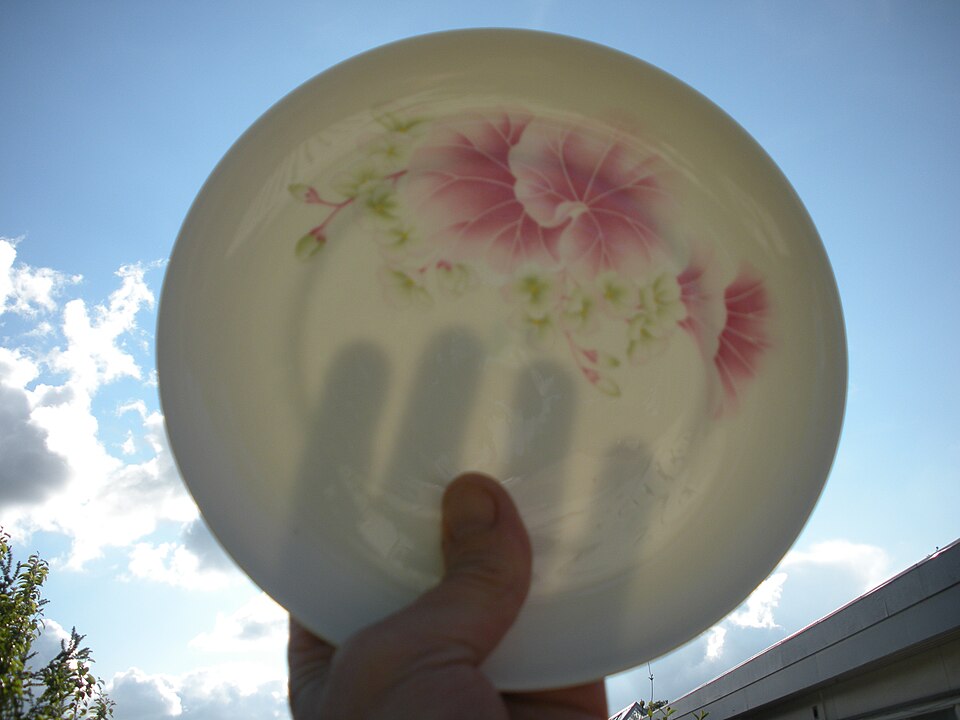

Porcelain is a ceramic material made by heating clay-type materials to high temperatures. It includes clay in the form of kaolinite.
Porcelain can be of different types: hard-paste porcelain, soft-paste porcelain and bone china. There is a distinction between hard-paste porcelain, fired at 1400 degrees Celsius, and soft-paste porcelain, fired at 1200 o C. Bone china is soft-paste porcelain made from bone ash and kaolinite.
The raw materials for porcelain are mixed with water and form a plastic paste. The paste is worked to a required shape before firing in a kiln.
China
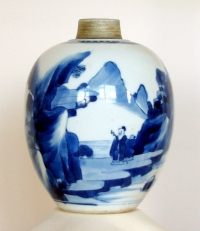
Porcelain originated in China, and ‘china’ is the common name of the product. By the Eastern Han dynasty period (196–220 AD) glazed ceramic wares had developed into porcelain. Porcelain manufactured during the Tang Dynasty (618–906 AD) was exported to the Islamic world, where it was highly prized. Early porcelain of this type includes the tri-colour glazed porcelain, or sancai wares. Porcelain items in the sense that we know them today could be found in the Tang Dynasty, and archaeological finds have pushed the dates back to as early as the Han Dynasty (206 BC – 220 AD). By the Sui Dynasty (581–618) and Tang Dynasty (618–907), porcelain was widely produced.
Europe
In 1712, many of the Chinese porcelain secrets were revealed in Europe by the French Jesuit father Francois Xavier d’Entrecolles, and published in Lettres édifiantes et curieuses de Chine par des missionnaires jésuites.
Germany
Early in the 16th century, Portuguese traders returned home with samples of kaolin clay, which they discovered in China to be essential in the production of porcelain wares. However, the Chinese techniques and composition used to manufacture porcelain were not yet fully understood.
In the German state of Saxony, the search concluded in 1708 when Ehrenfried von Tschirnhaus produced a hard, white, translucent type of porcelain with kaolin clay and alabaster, mined from a Saxon mine in Colditz. It was a closely guarded trade secret of the Saxon enterprise.
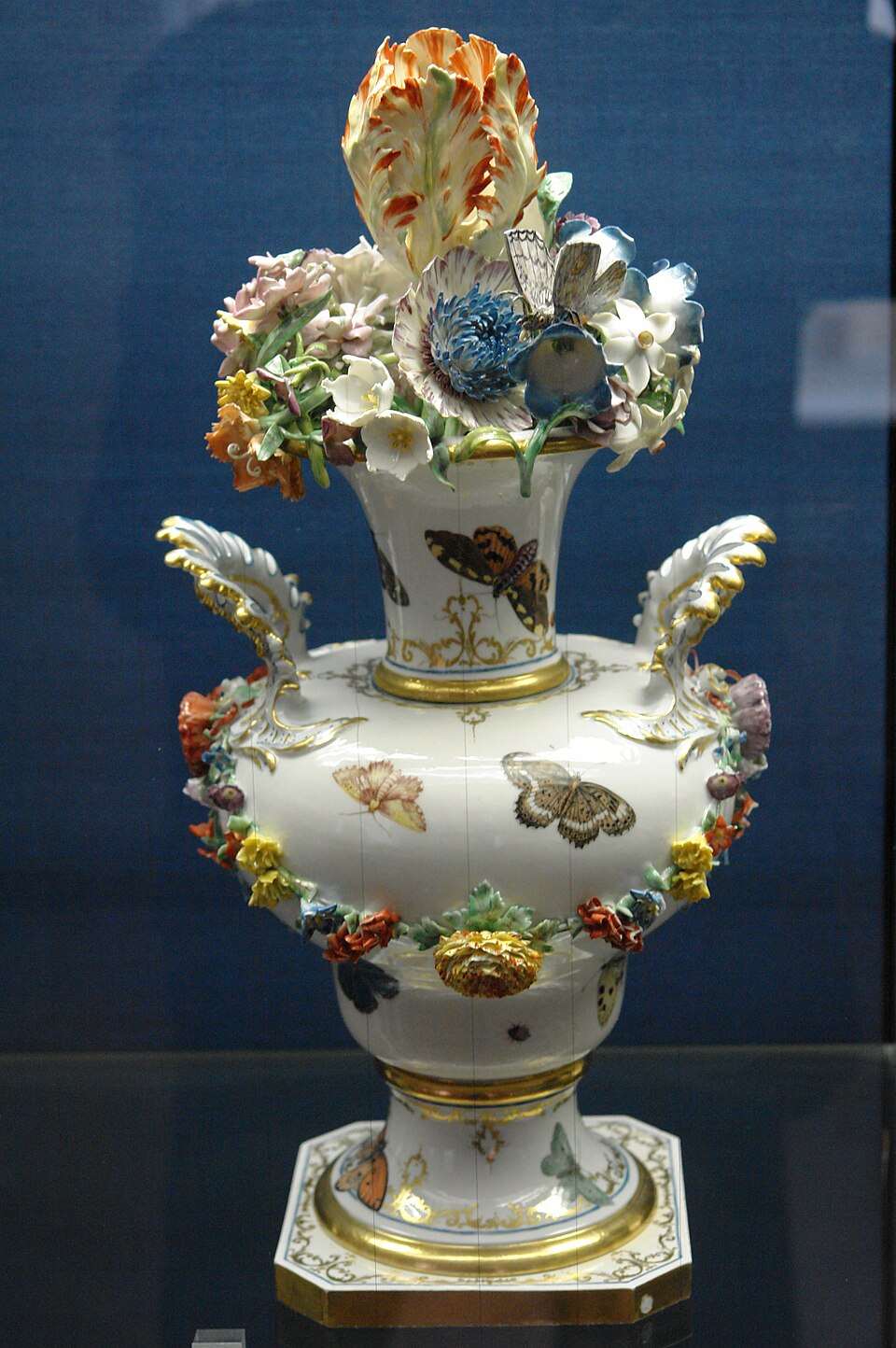
Von Tschirnhaus and his assistant Johann Friedrich Böttger were employed by Augustus the Strong and worked at Dresden and Meissen in Saxony. A workshop note records that the first specimen of hard, white and vitrified European porcelain was produced in 1708. At the time, the research was still being supervised by Tschirnhaus, who died in October of that year. Böttger reported to Augustus in March 1709 that he could make porcelain. He usually gets the credit for the European discovery of porcelain.
France
The first important French soft-paste porcelain was made at the Saint-Cloud factory before 1702. Soft-paste factories were established at Chantilly in 1730 and at Mennecy in 1750. The Vincennes porcelain factory was established in 1740, and moved later to larger premises in Sèvres. in 1756. Vincennes soft-paste was whiter and more perfect than any of its French rivals, which put Vincennes/Sèvres porcelain in the leading position in France.
England
The first soft-paste in England was demonstrated by Thomas Briand to the Royal Society in 1742, and is believed to have been based on the Saint-Cloud formula. In 1749, Thomas Frye took out a patent on a porcelain containing bone ash. This was the first bone china, later perfected by Josiah Spode.
In the twenty-five years after Briand’s demonstration, half a dozen factories were founded in England to make soft-paste table-wares and figures. Some famous factories were:
- Chelsea (1743)
- Bristol porcelain (1748)
- Royal Crown Derby (1750 or 1757)
- Royal Worcester (1751)
- Wedgwood (1759)
- Spode (1767)
William Cookworthy discovered deposits of kaolin clay in Cornwall. This helped the development of porcelain and other whiteware ceramics in England. Cookworthy’s factory at Plymouth, 1768, used kaolin clay and china stone. He made porcelain with a composition similar to the Chinese porcelains of the early 18th century.
Written for younger readers
Porcelain, in simpler words
This version comes from Wikijunior, a set of books written for children aged 8 to 11. It is shorter and uses plainer language than the article above.
From Wikijunior: How Things Work
Porcelain is a type of pottery (non-glass, metal or wood crafted pots), created from a ceramic material made by heating other natural occurring materials at high temperatures. Porcelain is sometimes called china or fine china.
Porcelain has a long history and before the industrial age it was relatively rare, especially that of high quality. This made it a luxury item and still makes it something that antique collectors have in high value.
The first type of porcelain was most probably first created in what is today China
After the first pieces of porcelain started to reach Europe, it started a movement to copy the process that was not understood or easily available to be studied, especially the understanding of the source materials.
Feldspar and silica found in kaolin clay which is then fired in a kiln at temperatures at 1,900F which causes the materials to form a dense glass like substance.
Where this page comes from
The article above is adapted from “Porcelain” on Simple English Wikipedia, by its contributors. We removed reference markers, navigation boxes and tables, expanded measurement templates into readable numbers, and kept the prose otherwise intact. The simpler version is adapted from Wikijunior on Wikibooks.
Both sources are published under CC BY-SA 4.0, so this page is published under the same licence. You may share and adapt it, including commercially, as long as you credit the original and keep the same licence.
Worksheets, answer keys and printable layouts elsewhere on K5Print are our own work and are not covered by this licence.