Rudder

A rudder is used to steer ships, boats, submarines, aircraft, hovercraft or other vehicles that move through air or water.
History of the rudder
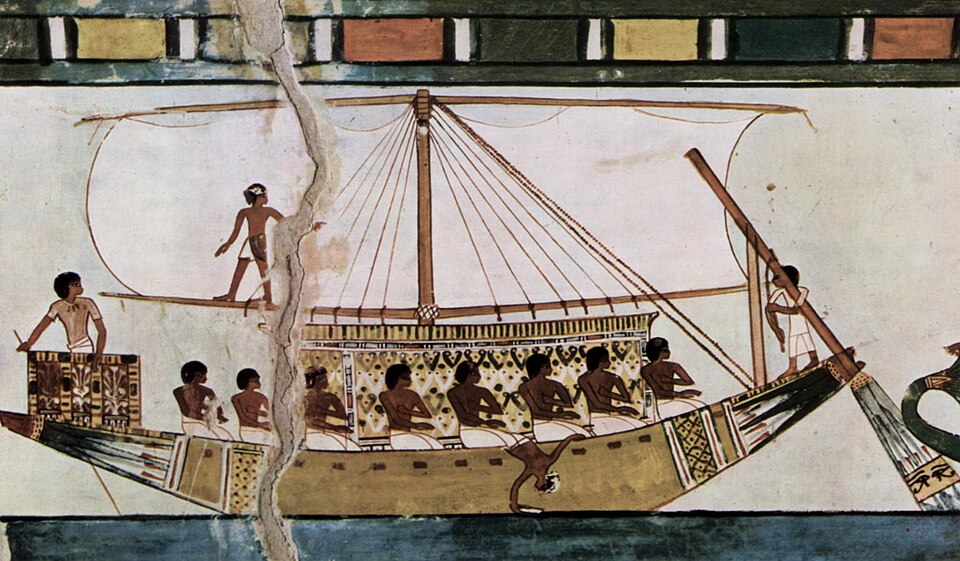
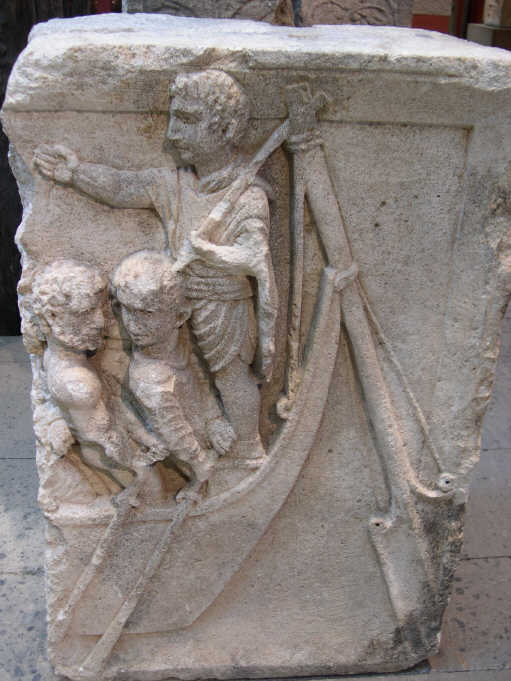
Oars mounted on the side of ships for steering are documented from the 3rd millennium BC in Persia and Ancient Egypt in artwork, wooden models, and even parts of actual boats of that times. An early example of an oar mounted on the stern is found in the Egyptian tomb of Menna (1422-1411 BC). Stern-mounted oars were also quite common in Roman river navigation as proved from reliefs more than a millennium later.
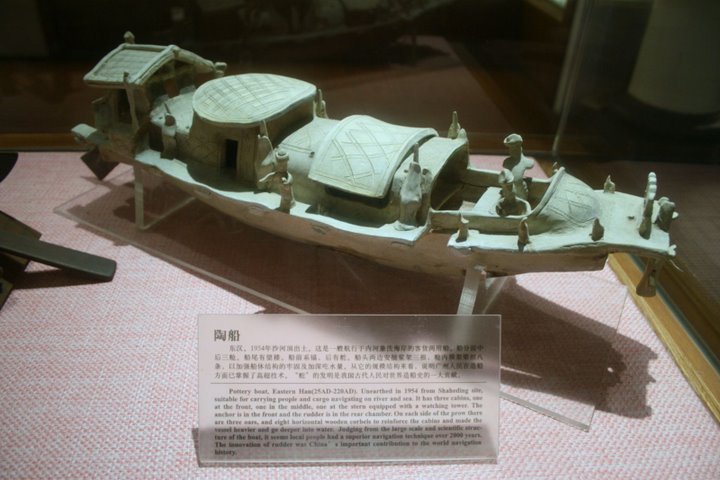
A depiction of a sternpost-mounted rudder can be seen on a pottery model of a Chinese junk dating from the 1st century AD during the Han Dynasty, predating their appearance in the West by a thousand years. The technology of stern-mounted rudder in Europe and Islam World, which was introduced by travelers in the Middle Ages, was transferred from China
Literature
- Lawrence V. Mott, The Development of the Rudder, A.D. 100-1600: A Technological Tale, Thesis May 1991, Texas A&M University
- Needham, Joseph (1986). Science and Civilization in China: Volume 4, Physics and Physical Technology, Part 3, Civil Engineering and Nautics. Taipei: Caves Books Ltd.
Where this page comes from
The article above is adapted from “Rudder” on Simple English Wikipedia, by its contributors. We removed reference markers, navigation boxes and tables, expanded measurement templates into readable numbers, and kept the prose otherwise intact.
Both sources are published under CC BY-SA 4.0, so this page is published under the same licence. You may share and adapt it, including commercially, as long as you credit the original and keep the same licence.
Worksheets, answer keys and printable layouts elsewhere on K5Print are our own work and are not covered by this licence.