Shampoo
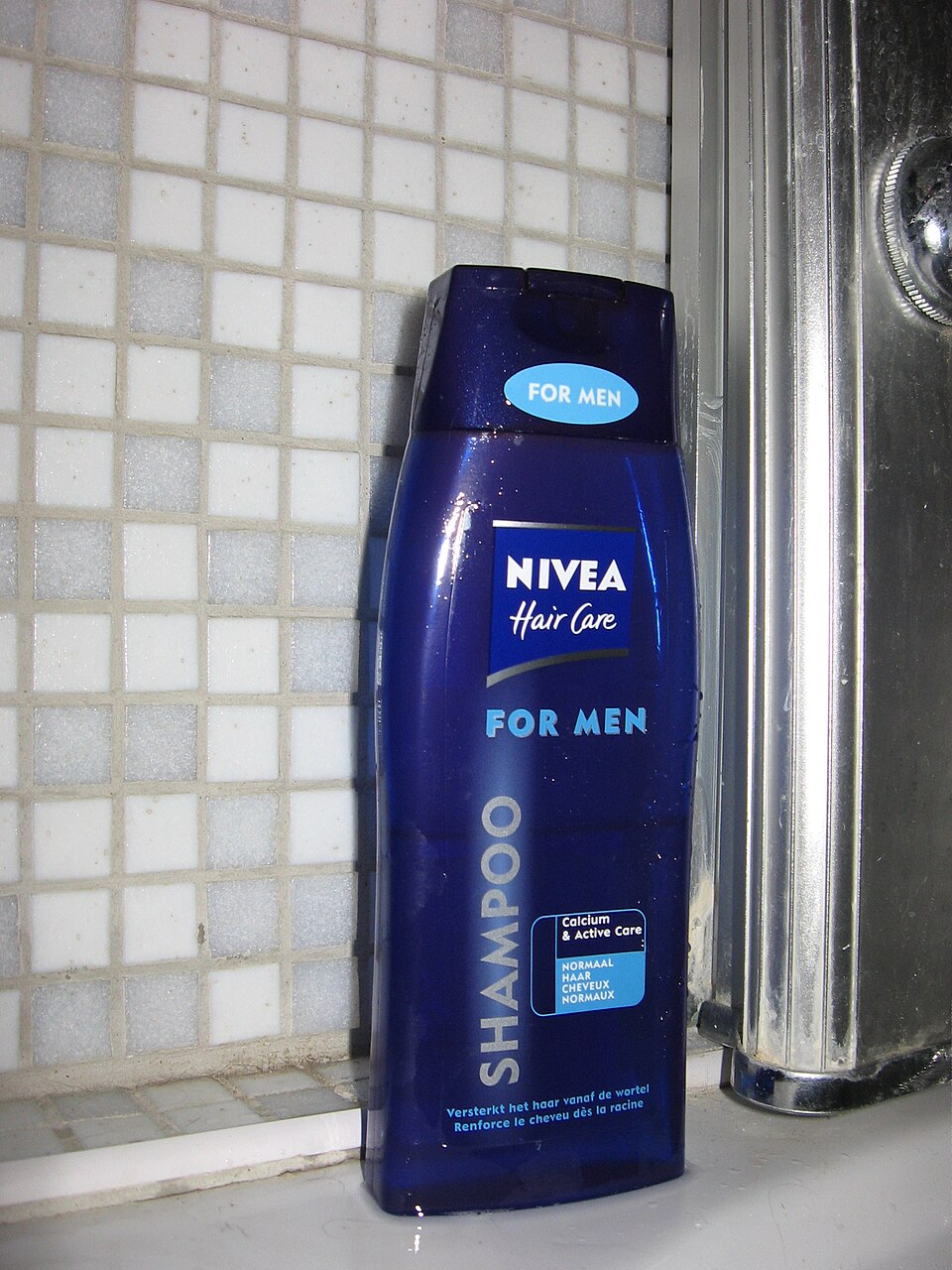

Shampoo is a beauty care product. It is used to remove natural oils from hair. It is like liquid soap, but it is made to wash hair. It is sold in stores, and many people use it to make their hair clean. After people use shampoo, they might use a conditioner, which makes the hair soft. Together they have a good effect on a person’s hair. The people who make shampoo try to make it smell nice. They also try to make the shampoo healthier.
In addition to shampoo for hair, there are body shampoos made to wash an entire body.
Written for younger readers
Shampoo, in simpler words
This version comes from Wikijunior, a set of books written for children aged 8 to 11. It is shorter and uses plainer language than the article above.
From Wikijunior: How Things Are Made
Head & Shoulders shampoo bottle.jpg|A generic shampoo
Shampoo formulations consists of water, detergents, foam boosters, thickeners, conditioning agents, preservatives, modifiers, and special additives.
Water: Typically it makes up about 70-80% of the entire formula. Deionized water, which is specially treated to remove various particles and ions, is used in shampoos.
Detergents: It is also known as sufactants, are the cleansing ingredients in shampoos. Sufactants are surface active ingredients, meaning they can interact with a surface. The chemical nature of a sufactant allows it to surround and trap oily materials from surfaces.
Foam boosters: These materials, called alkanolamides, help increase the amount of foam and the size of the bubbles.
Thickeners: It is used to increase the viscosity.
Conditioning agents: The materials are also added to shampoos to offset the sometimes harsh effect of surfactants on hair and fabrics. improve its feel, softness, and hair comb-ability, while reducing static charge.
Modifiers: There are a few type of modifier such as opacifiers are added to make the shampoo opaque and give it a pearly look. Acids or bases such as citric acid or sodium hydroxide are added to adjust the pH of a shampoo so the detergents will provide optimal cleaning.
Special additives: Fragrance oils and dyes are added to increase fragance of shampoo. Natural materials such as botanical extracts, natural oils, proteins, and vitamins all impart special qualities and help sell shampoos. Some additives are included to address the problem of dandruff.
Step 1: Raw materials, which are typically provided in large drums are poured into the batch tank and thoroughly mixed. Depending on the formula, these batches can be heated and cooled as necessary to help the raw materials combine more quickly.
Step 2: At the start of the filling line, empty bottles are put in a large bin called a hopper. Here, the bottles are physically manipulated until they are correctly oriented and standing upright. They are then moved along a conveyor belt to the filling line, which holds the shampoo.
Step 3: The filling line is made up of a series of piston filling heads that are calibrated to deliver exactly the correct amount of shampoo into the bottles.
Step 4: The bottles move to the capping machine. Much like the bin that holds the empty bottles, the caps are also put in a hopper and then correctly aligned. As the bottles move by the caps are put on and twisted tight.
Mesin pengisi detergent.png|Step 3: Filling machines are tuned to deliver exactly the correct amount of shampoo into the bottles. Mesin penutup Botol.png|Step 4: Capping machine that put on the cap and twist to lock the cap.
Where this page comes from
The article above is adapted from “Shampoo” on Simple English Wikipedia, by its contributors. We removed reference markers, navigation boxes and tables, expanded measurement templates into readable numbers, and kept the prose otherwise intact. The simpler version is adapted from Wikijunior on Wikibooks.
Both sources are published under CC BY-SA 4.0, so this page is published under the same licence. You may share and adapt it, including commercially, as long as you credit the original and keep the same licence.
Worksheets, answer keys and printable layouts elsewhere on K5Print are our own work and are not covered by this licence.