Time
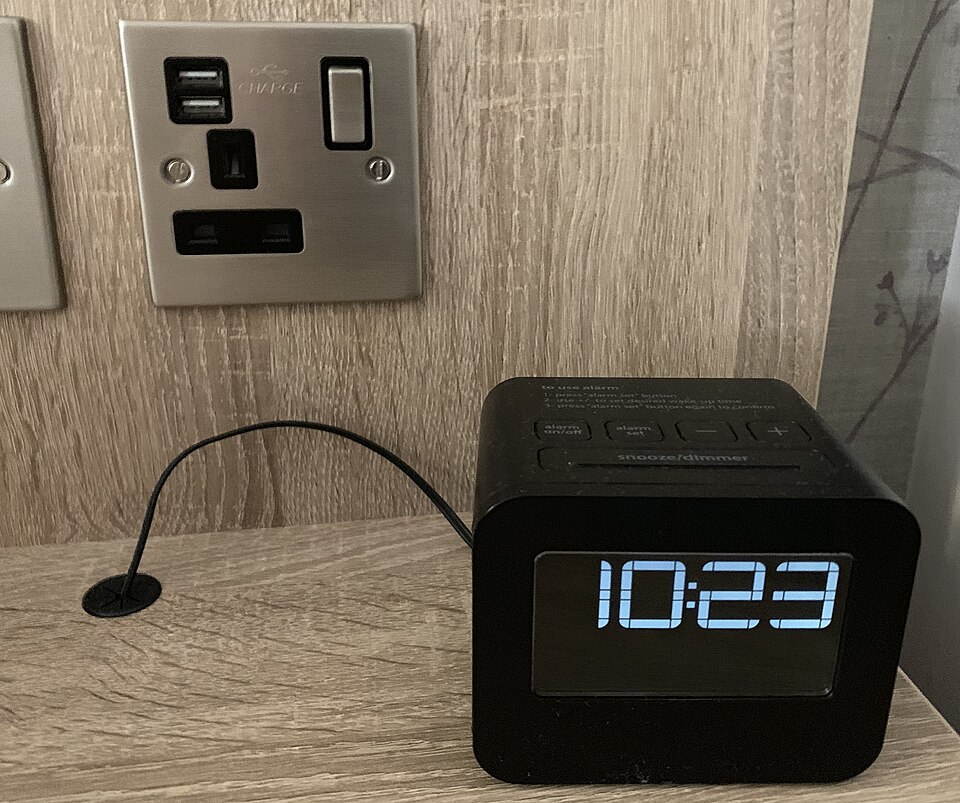

Time is the continued proсess of existence and events. It happens in an apparently irreversible way from the history, through the now and to the future.
To measure time, we can use anything that repeats itself regularly. One example is the start of a new day (as Earth rotates on its axis). Two more are the phases of the moon (as it orbits the Earth), and the seasons of the year (as the Earth orbits the Sun).
Even in ancient times, people developed calendars to keep track of the number of days in a year. They also developed sundials that used the moving shadows cast by the sun through the day to measure times smaller than a day. Today, highly accurate clocks can measure time in less than a billionth of a second. The study of time measurement is known as horology.
The SI (International Systems of Units) unit of time is one second, written as s. When used as a variable in mathematics, time is often represented by the symbol t.
In Einsteinian physics, time and space can be combined into a single concept. For more on the topic, see space-time continuum.
Units of time
- 1 millennium = 10 centuries = 100 decades = 200 lustrums = 250 quadrenniums = 333.33 trienniums = 500 bienniums = 1,000 years
- 1 century = 10 decades = 20 lustrums = 25 quadrenniums = 33.33 trienniums = 50 bienniums = 100 years
- 1 decade = 2 lustrums = 2.5 quadrenniums = 3.33 trienniums = 5 bienniums = 10 years
- 1 year = 12 months = 52 weeks (53 weeks in leap years) = 365 days (366 days in leap years)
- 1 month = 4.3 weeks = 31 days
- 1 week = 7 days
- 1 day = 24 hours
- 1 hour = 60 minutes
- 1 minute = 60 seconds
- 1 second = 1000 milliseconds
- 1 millisecond = 1/1,000 of a second
- 1 microsecond = 1/1,000,000 of a second
- 1 nanosecond = 1/1,000,000,000 of a second
- 1 picosecond = 1/1,000,000,000,000 of a second
- 1 femtosecond = 1/1,000,000,000,000,000 of a second
- 1 attosecond = 1/1,000,000,000,000,000,000 of a second
- 1 Planck time = 1/1,000,000,000,000,000,000,000,000,000,000 of a second
Things used to measure time
- Clock
- Hourglass
- Stopwatch
- Sundial
- Circadian rhythm
Time of day
- World Clock
- U.S. Naval Observatory
- Time in Hexadecimal numeral system
Written for younger readers
Time, in simpler words
This version comes from Wikijunior, a set of books written for children aged 8 to 11. It is shorter and uses plainer language than the article above.
From Wikijunior: How Things Work
There are two main views of what time is. The first is that time is part of the structure of the universe. It is a dimension in which events occur in sequence and it can be measured just like length, height and width. Sir Isaac Newton, a very famous scientist who lived during the 17th century, believed this. This view of time is sometimes referred to as Newtonian time, because of that. Another view is that time is only a way humans sequence and compare events. In this view, time is neither an event nor a thing, and thus is not itself measurable.
In the rest of this article we will discuss time based on the first viewpoint, assuming that time is a thing that exists and can be measured.
Time was not invented. Before time, there was nothing.
The first people to use a calendar to measure time that we know of were the Sumerians around 2000 B.C. Almost at the same time the Harappan civilization had achieved greater accuracy in measurement of time. Later on, the ancient Egyptians and Romans invented time keeping instruments like the sundial, the water clock and the hourglass. The famous scientist, Albert Einstein made some remarkable discoveries about how time and space are related to one another…..he called his theory, the Theory of Relativity.
Time is something that is all around us, and affects everything we do, yet is difficult to understand. Time has been studied by religious, philosophical, and scientific scholars for thousands of years. We experience time as a series of events passing from the future through the present to the past. Time is also how we compare the duration (length) of events. You can mark the passing of time yourself by observing the repetition of a cyclical event. A cyclical event is something that happens again and again regularly. Some examples of cyclical events are the passage of a pendulum and the rising of the sun.
Today we can measure time very accurately with an atomic clock. It turns out that caesium-133 atoms have a very predictable cyclical event that can be monitored. This event happens 9,192,631,770 (over 9 billion) times every second. Atomic clocks are the most accurate time standards known.
Time allows things to change. Without time there is no before or after. A universe without time would function very differently from ours. The past cannot be changed, (so far as we understand) but the future is affected by the present. So people use time to create change. When you walk down a street, you are using time to create change. You change your location. You change your heart rate. You even change the street by walking on it. Time is nature’s way of keeping everything from happening all at once. - Anonymous
The world knows a little more about this now than 100 years ago. Scientists have discovered that time is not fixed. In other words, an hour here is not the same as an hour somewhere else. How can this be? Well, time has been found to be relative. When you move, time slows down. It’s true. Unfortunately you can’t tell because it doesn’t slow down that much. Every time something moves, time slows down for it.
An experiment was performed by an airplane pilot with a very accurate clock in their airplane. The pilot set the clock to the same time as one on the ground and then took off. After flying as fast as they could, they landed and compared the clock to the one on the ground and found that the clock in the airplane had slowed down during the flight. Just a little but still it slowed down. That means that pilot didn’t age as much as the people on the ground.
If your parents rode in a vehicle that traveled very close to the speed of light time would slow down for them so that you could be older than them when they stopped riding.
Can time go backwards? Maybe. Can time stop? Maybe.
It would be better to ask “What in the world hasn’t changed because of time?” Change itself could not exist without time.
Time may have come before the creation of the universe. Some people believe that time began when matter and antimatter bumped into each other and created a huge amount of energy and light. If you had been there it would have sounded like a big bang.
No one really knows what would have come before time but there are many theories, ranging from absolutely nothing to a different universe.
Where this page comes from
The article above is adapted from “Time” on Simple English Wikipedia, by its contributors. We removed reference markers, navigation boxes and tables, expanded measurement templates into readable numbers, and kept the prose otherwise intact. The simpler version is adapted from Wikijunior on Wikibooks.
Both sources are published under CC BY-SA 4.0, so this page is published under the same licence. You may share and adapt it, including commercially, as long as you credit the original and keep the same licence.
Worksheets, answer keys and printable layouts elsewhere on K5Print are our own work and are not covered by this licence.