Toilet Paper
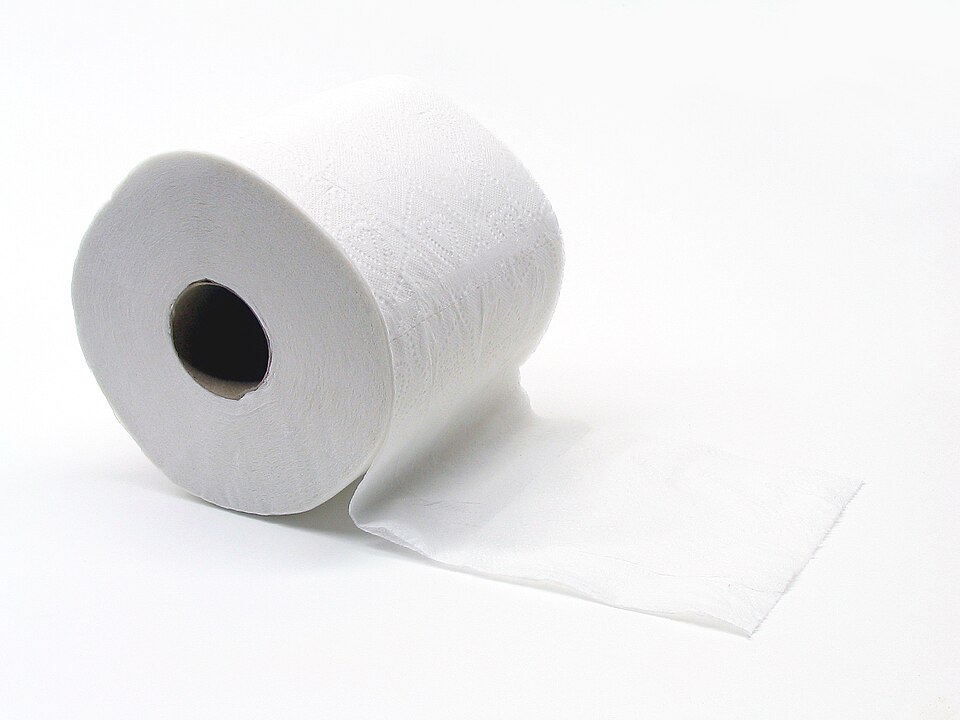

Toilet paper is soft paper, used to wipe urine or feces after using the toilet. It is usually sold in white rolls, made up of square sheets. Modern toilet paper is very absorbent (and also very thin) and is designed to break up in the sewage system. The paper is often available in different textures and colours. One square sheet of toilet paper is called a “ply”. 4-ply toilet paper has a thickness of 4 square sheets of toilet paper. There was a shortage in 2020 because of the COVID-19 virus, its shortage was also caused by people rushing to buy toilet paper.
History
In former times people had no toilet paper and used other things. The Greeks, for example, used stones or human hair, Germans used leaves and straw. Some people used maize leaves. Some used sand instead of toilet paper. In the Middle Ages people used moss and the rich ones preferred sheep wool. In the 6th century AD, people in China were the first to use paper for hygiene, but at the time it wasn’t specially designed to clean feces. The first toilet paper was produced in China in the 14th century. In 1857 Colton Blakeslee produced toilet paper in cartons in the USA. The first rolls of toilet paper were produced in 1890 in Great Britain. In many parts of the world, newspaper is used instead of toilet paper.
Written for younger readers
Toilet Paper, in simpler words
This version comes from Wikijunior, a set of books written for children aged 8 to 11. It is shorter and uses plainer language than the article above.
From Wikijunior: How Things Are Made
Pink Toilet Paper.jpg | Pink toilet paper Toilet papers are sanitary papers that need to be clean and hygienic. Toilet paper can be one- or two-ply, meaning that it’s either a single sheet or two sheets placed back-to-back to make it builder and more absorbent. Color, scents, and embossing may also be added,
Toilet paper is generally made from “virgin” paper, using a combination of softwood and hardwood trees.
Softwood trees such as Southern pines and Douglas firs have long fibers that wrap around each other; this gives paper strength.
Hardwood trees like gum, maple and oak have shorter fibers that make a softer paper. Toilet paper is generally a combination of approximately 70% hardwood and 30% softwood.
Other materials used in manufacture include water, chemicals for breaking down the trees into usable fiber, and bleaches. Companies that make paper from recycled products use oxygen, ozone, sodium hydroxide or peroxide to whiten the paper.
Step by step (Preferable in bullet point list)
- Step 1: Tree logs that arrived at the mill and are debarked, a process that removes the tree’s outer layer while leaving as much wood on the tree as possible. The debarked logs are chipped into a uniform size approximately 1/4 inches . These small pieces make it easier to pulp the wood.
- Step 2: The batch of wood chips is then mixed with cooking chemicals; the resultant slurry is sent to a 18.3-m tall pressure cooker called a digester. During the cooking, which can last up to three hours, much of the moisture in the wood is evaporated resulting pulps.
- Step 3: The pulp goes through a multistage washer system that removes most of the lignins and the cooking chemicals. The fluid which are called as black liquor, is separated from the pulp, which goes on to the next stage of production
- Step 4: The washed pulp is sent to the bleach plant where a multistage chemical process removes color from the fiber. Residual lignin, the adhesive that binds fibers together, will yellow paper over time and must be bleached to make paper white
- Step 5: The pulp is mixed with water again to produce paper stock, a mixture that is 99.5% water and 0.5% fiber. The paper stock is sprayed between moving mesh screens, which allow much of the water to drain.
- Step 6: Next, the paper is creped, a process that makes it very soft and gives it a slightly wrinkled look. During creping, the paper is scraped off the Yankee Dryer with a metal blade. This makes the sheets somewhat flexible but lowers their strength and thickness so that they virtually disintegrate when wet. The paper is then wound on jumbo reels that can weigh as much as five tons.
- Step 7:The paper is then loaded onto converting machines that unwind, slit,and rewind it onto long thin cardboard tubing, making a paper log. The paper logs are then cut into rolls and wrapped packages
Debarker.jpg|Step 1: Logs are debarked Florida Pulp and Paper Company mill, Cantonment, Florida.jpg | Step 2: The wood chips are cooked inside chemicals resulting the pulps Fab2.jpg | Step 6: Paper rolls is being creped
Where this page comes from
The article above is adapted from “Toilet Paper” on Simple English Wikipedia, by its contributors. We removed reference markers, navigation boxes and tables, expanded measurement templates into readable numbers, and kept the prose otherwise intact. The simpler version is adapted from Wikijunior on Wikibooks.
Both sources are published under CC BY-SA 4.0, so this page is published under the same licence. You may share and adapt it, including commercially, as long as you credit the original and keep the same licence.
Worksheets, answer keys and printable layouts elsewhere on K5Print are our own work and are not covered by this licence.