Vacuum Cleaner
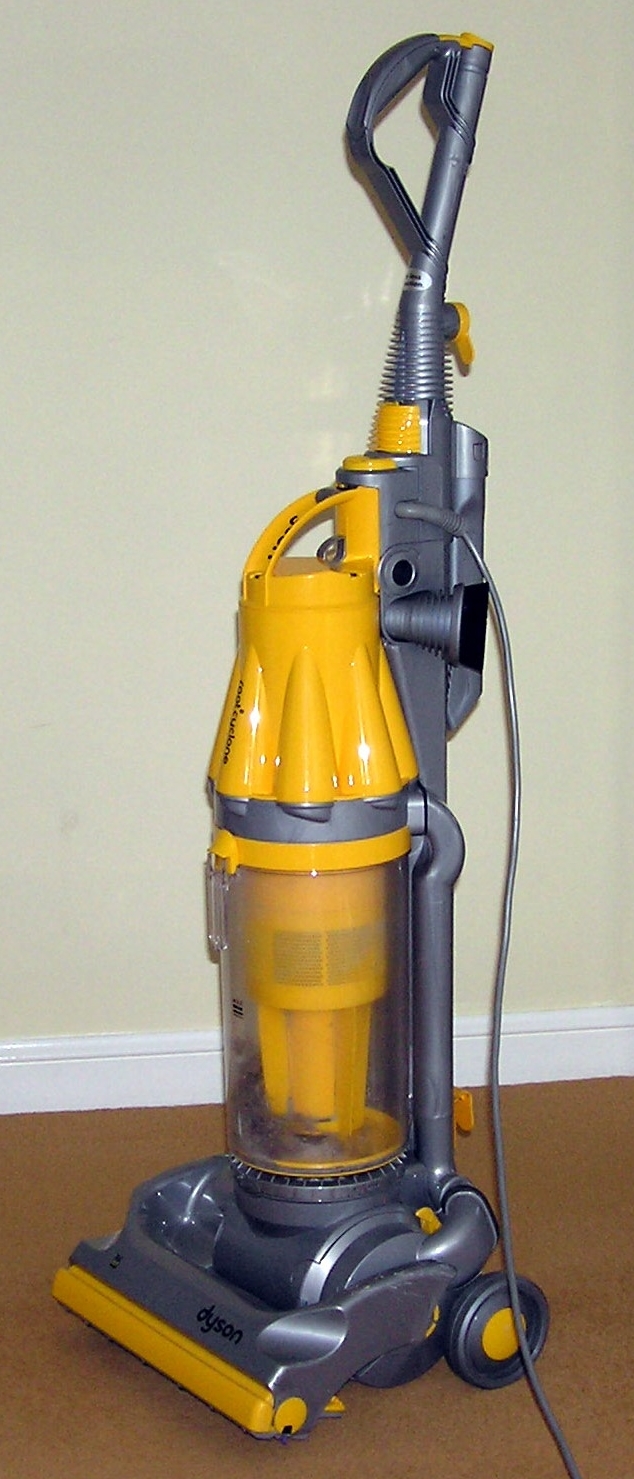

A vacuum cleaner, also spelled “vacuum-cleaner”, is a device that cleans dust and dirt from floors. Sometimes it is just called a vacuum. The word vacuum comes from the fact that it uses the force of a vacuum to suck dirt into a large chamber from which it can be dumped into the garbage.
In the 1920s, an Ohio janitor named James Murray Spangler created a carpet sweeping contraption out of a soap box, a broom handle, a pillowcase, and an electric motor. He then began to sell his machine to local housewives. The first plastic vacuum cleaner was produced in the 1930s, and the precursor to modern central vac systems was created in 1952 by the Hoover Company, whose name was now synonymous with “vacuuming”. By the 1960s, vacuum cleaners were much more lightweight and easy to use.
There are several types of vacuum cleaners:
- Upright vacuum cleaners
- Canister vacuum cleaners
- Robot vacuum cleaners
- Handheld vacuum cleaners
- Car vacuum cleaners
- Carpet cleaners
Written for younger readers
Vacuum Cleaner, in simpler words
This version comes from Wikijunior, a set of books written for children aged 8 to 11. It is shorter and uses plainer language than the article above.
From Wikijunior: How Things Work
A vacuum cleaner is an apparatus designed to suck up small bits of dust, lint, crumbs and other small bits of dirt off the floor or carpet into a sealed bag that can then be disposed of. Vacuum cleaners come in many styles and shapes, but the basic principle is the same.
Hubert Cecil Booth, a British engineer, received a British patent for a vacuum cleaner on August 30th 1901.
Most Vacuums get their power from a cord connected to a plug, which is plugged into the electric grid. However, some hand held vacuums use batteries that have to be recharged occasionally.
The heart of a vacuum cleaner is the internal fan. It is usually covered with a grile or hidden deep within the vacuum to keep people from hurting themselves by poking fingers or toes inside. This fan pulls air from outside the vacuum into a bag.
The bag allows air to pass through it but traps the dust and lint and such that is sucked in with the air current. It was once made of cloth, but is now usually made of paper that can be disposed of, debris and all. Some more recent vacuums use a plastic tray or cup that can be removed, emptied and placed back inside for indefinite re-use.
Vacuums are not normally dangerous. However, if they are used outside, where it is wet, the electricity inside can escape and electrocute people. If you put the vacuum hose against someone’s eyes then they might have their eyesight damaged.
The vacuum cleaner cleans carpets and floors by sucking up dirt, crumbs, dust, and many other bits and bobs.
The air enters the vacuum cleaner in different methods, depending on the configuration. On an “upright” vacuum, the air is pulled in through the head of the vacuum, which sits on the floor. Other models use a flexible hose or (in hand-held configurations) have the intake built into the “nose.”
It has moved dirt from one part of the world, to another. It is another example of a machine that does the job better and quicker and with less effort than a broom or mop
Electricity, the force that powers the vacuum cleaner, had to be developed to power the fan. The fan is powered by a motor, which also had to be invented.
Where this page comes from
The article above is adapted from “Vacuum Cleaner” on Simple English Wikipedia, by its contributors. We removed reference markers, navigation boxes and tables, expanded measurement templates into readable numbers, and kept the prose otherwise intact. The simpler version is adapted from Wikijunior on Wikibooks.
Both sources are published under CC BY-SA 4.0, so this page is published under the same licence. You may share and adapt it, including commercially, as long as you credit the original and keep the same licence.
Worksheets, answer keys and printable layouts elsewhere on K5Print are our own work and are not covered by this licence.