Video Game
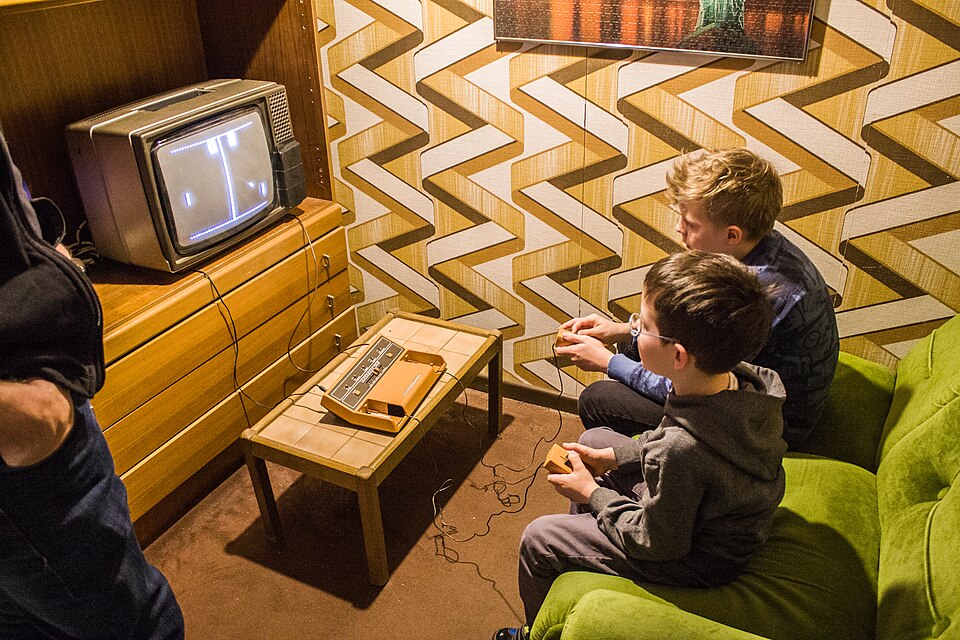

A video game is an electronic game played on a video screen (normally a television, computer monitor, or built-in screen when played on a handheld machine).
There are many types, or genres, of video games: role-playing games; shooters, first-person shooters, side-scrollers, and platformers.
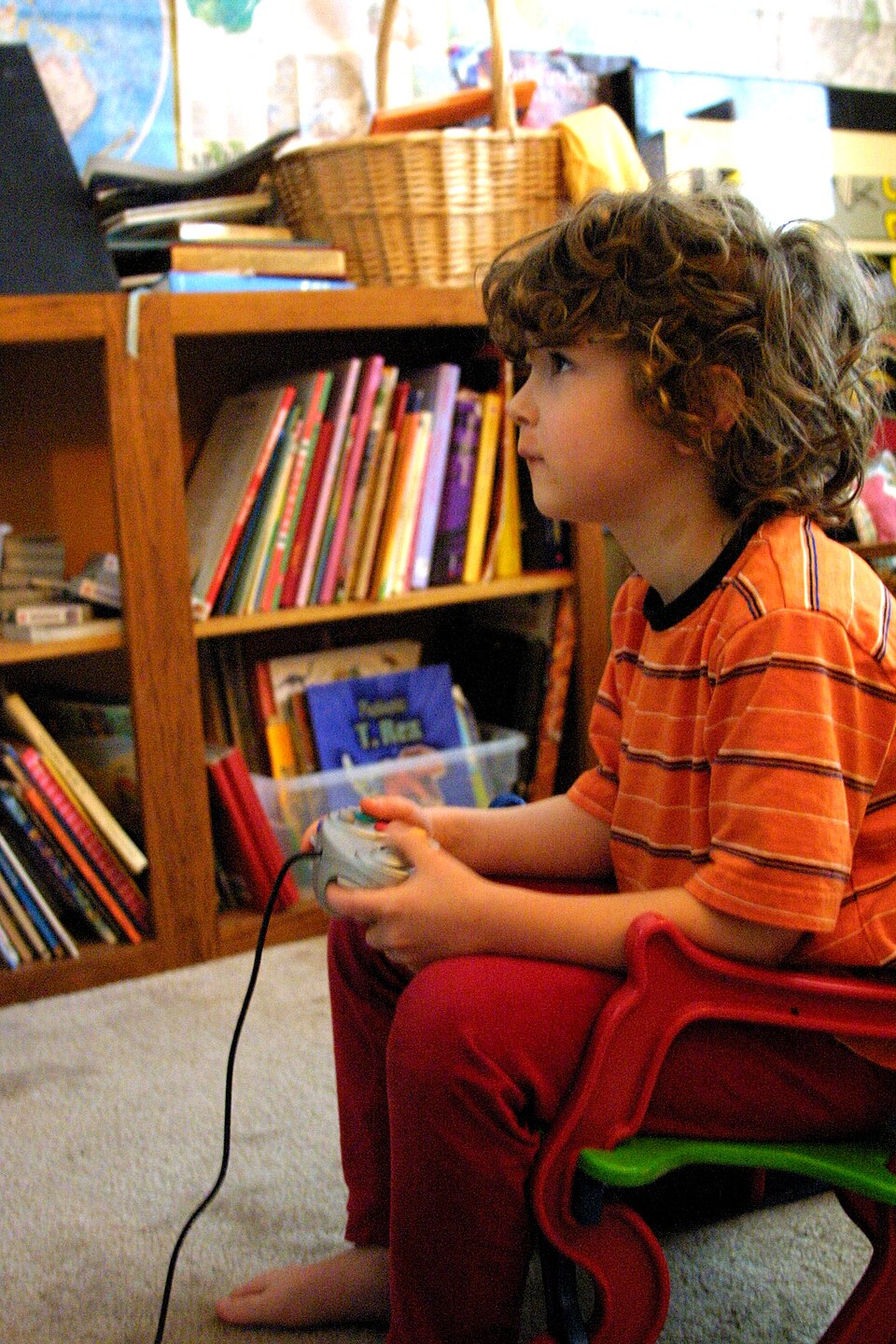
Video games usually come on CDs, DVDs or downloaded digitally. Many games used to come inside of a cartridge. A specialized device used to play video games at home is called a console. There have been many types of consoles and home computers used to play video games. Some of the first consoles made were the Atari 2600 in the 1970s and the Sega Master System and Nintendo Entertainment System in the 1980s. The newest line of video game consoles are Microsoft’s Xbox Series X or Series S Sony’s PlayStation 5 and Nintendo’s Nintendo Switch 2. The best-selling video game console to date is the PlayStation 2, made by Sony.
People can also use computers to play games, which are sometimes called PC games. Older gaming consoles do not get many games after a while, but in recent years newer consoles rarely get the older games. A lot of the time console games which are unplayable or are on older hardware are ported or emulated on PCs (see emulator). This means that new computers can play many old console games along with games made just for new computers. Older games are emulated because of the ease of downloading them as opposed to having to use older hardware. Additionally, emulating games usually provides better performance as opposed to using the older hardware to access the games.
People can play portable video games anywhere. Mobile devices (running operating systems such as iOS or Android) also can download games, making them a popular choice for gaming out and about. Mobile phones have many games, and some games on console are accessible by using a mobile emulator. Not all PC or console games are on mobile or iPad/ iPod/Tablet without an emulator.
Competitions of video game players are called electronic sports, also known as e-sports.
Current generation consoles
- The current Xbox models are the Xbox Series X and Series S, which came out in November 2020. The console before it, the Xbox One came out in November 2013 followed by the Xbox One S in November 2016, and then by the Xbox One X, originally named, in November 2017.The Xbox line of products were made by the American company Microsoft. It replaced the Xbox 360, offering a similar online experience and controller layout, but with improved graphics, hardware, and accessibility. Like the original and 360 versions, it also allows people to put music from an MP3 player or other sources onto the system. It was the last of the 8th generation consoles to come out.
- The PlayStation 5, which came out in November 2020, is currently the newest console from the PlayStation series of game consoles from Sony Computer Entertainment, a division of the Japanese company Sony. It has two versions; one can play disc games, and one cannot. It can play many of the games from the console that came before it, the PlayStation 4.
- Nintendo, another Japanese company, has made many video game consoles over the years. The most recent is the Nintendo Switch 2, which came out in June 2025. The standard version of the console can be used as both a handheld console or can be connected to a television and used like a standard console. It is a console from the ninth generation of video games. It is much more powerful than the previous console, the Nintendo Switch.
Current handheld consoles
One handheld console that is supported today is the Switch, which looks like a tablet computer but can also be plugged into a TV. It is the first example of a “hybrid console” that can be used as both as a TV-based model and a handheld device. It was released in March 2017.
Sony’s PlayStation Portable (PSP) came out in 2004. A new version, the PlayStation Vita, first came out in 2012. Additionally, Sony released the PlayStation Portal in 2023, but it requires an active PS5.
Also, in 2004, Nintendo released the Nintendo DS (Dual Screen), which has two separate screens, where one of which is a touchscreen. New versions came out in later years, such as the Nintendo DSi in 2008 and the Nintendo DSi XL. The Nintendo 3DS, the first handheld console with 3D graphics, came out in 2011. The 2DS followed in 2013. The New 3DS XL, which is similar to the 3DS but with updated graphical capabilities, was released in 2015. The latest entry into the DS lineup is the “New 2DS XL”, released on the 28th of July 2017.
Valve released the Steam Deck in Feb 2022 in the North America region. The Steam Deck is a handheld console that can play games made for personal computers.
Asus released the ROG Ally in June 2023.
History
The first video game is believed to be Tennis for Two, a rudimentary tennis game to be played with two people developed in 1958. Another early example is Spacewar!, developed in 1962.
In the 1950s, when the first computers began creation, three people had some ideas to create the basis of video games. In 1951, Ralph Baer, an American engineer of Loral Electronics, tried to create “the best television”, proposing to add a gaming module, but his employer did not like his idea. Even though his idea was never agreed on, he is the first man to have thought about creating video games. Additionally, later on in his life, Ralph made the first video game console, the Odyssey. In 1952, A.S Douglas, from the University of Cambridge in the UK, made a video game on a computer to illustrate one of his speeches. The game, called OXO, was a tic-tac-toe game, with two players (one person vs a computer). In 1953, Willy Higinbotham made a game called Tennis for Two, similar to Pong, to entertain visitors at the Brookhaven National Laboratory. Another early video game was some version of checkers, but this is commonly overlooked.
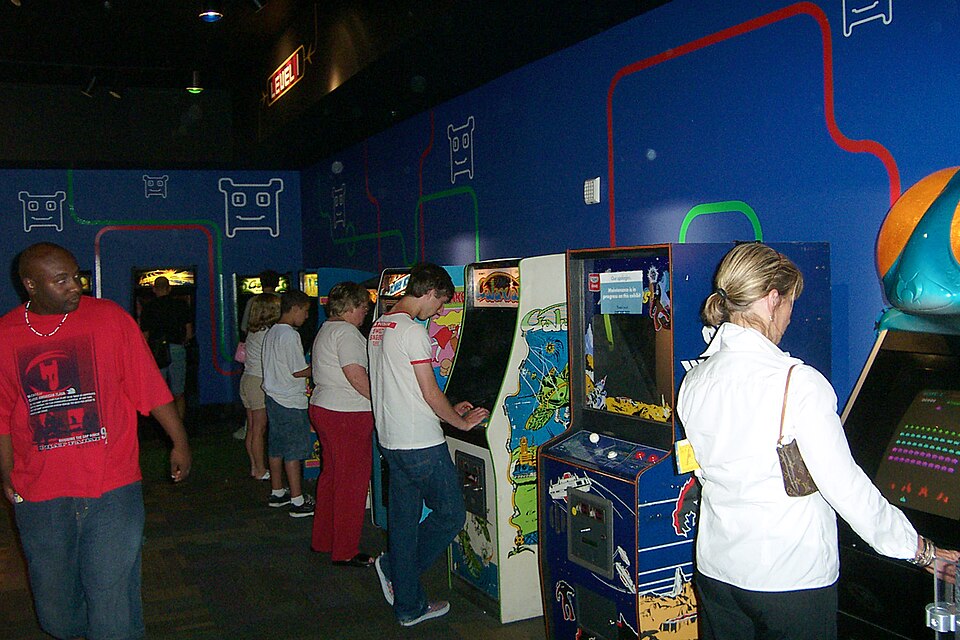
One of the most famous games of all time is called Space Invaders. Space Invaders Keplerians was made in 1978 as a coin operated arcade game, but a version has been made for most game consoles and home computers available.
Written for younger readers
Video Game, in simpler words
This version comes from Wikijunior, a set of books written for children aged 8 to 11. It is shorter and uses plainer language than the article above.
From Wikijunior: How Things Are Made
Celeste screenshot 06.png|Screenshot of a platforming game 4elements2.jpg|Screenshot of puzzle game Atocityversion8screenshot.JPG|Screenshot of simulation game Absolver screenshot Fight02.png |Screenshot of fighting game Battle for the Galaxy gameplay.png|Screenshot of strategy game Breached screenshot 10.jpg|Screenshot of racing game Bot Colony Gameplay 2 CC.jpg|Screenshot of shooting game Video games are played at home on a personal computer and as a handheld portable game. They are packaged in large consoles, game CD’s that can only be played on the same manufacturer’s hardware (i.e. Nintendo Wii, Microsoft X Box, and Sony Playstation), and CD-ROMs. It is made up of a program that instructs the computer to display specific visual and audio effects, video games utilize cutting-edge technology in order to provide fast-paced entertainment.
We just need
- A bunch of authors
- Lots of computer storage
- Coding skills That’s it.
The video game is usually a product of creative processes and does not need any raw materials to produce it. Design is the key aspect of making all video games. It is typically done by a team of skilled computer programmers, writers, artists, and other game designers. During this phase of development, they generate the game’s specifications, which include game type, objective, and graphics.
While creating a video game is rarely a step by step process, there are a variety of tasks that must be accomplished during the development phase.
In the beginning, the type and objective of the game are determined. In general, games fall within a few types of categories, or genres, including fighting, shooting, strategy, simulations, adventure, platforming, and racing.
Step by step (Preferable in bullet point list)
- Step 1: Typically, writers are responsible for creating a game’s story complete with a setting, characters, and plot. This gives the game a purpose and makes it more enjoyable for the player. It also provides an objective for the player and a guideline for the rules of the game. This information is then used to create the game’s manual. Often, the inspiration for a story is derived from popular movies or books.
- Step 2: The story is transferred to storyboards, where preliminary drawings are also added. Storyboards are a series of one-panel sketches pinned to the board. Each sketch is accompanied by story dialogue and/or character description.
- Step 3: After the type of game and story are outlined, the game’s format can be determined. The format refers to what the player sees when playing the game. A variety of formats exist including platform, top-down, scrolling, isometric, three-dimension (3D), and text.
- Step 4: The artist adds drawings to storyboards, including character descriptions and arrows showing how the characters will move. Final pictures are created in two ways. An artist can render the final picture by creating converted graphics. Converted graphics are images that have been drawn by the artist using a computer. More life-like images are created by filming the action with an actor (motion capture) and then electronically digitizing the image.
- Step 5: Dialogue and sound effects are recorded in a sound studio using various audio techniques. Once recorded on digital audiotape, the sounds are computerized by a synthesizer-a computer that specifically alters and translates sound into data.
- Step 6: When all of the preliminary design elements are determined, programming, or coding, can begin. The first step in this process is drawing a flowchart, which shows the logical progression of the computer program. A variety of programming languages are used such as C++, Java, or visual BASIC. The code is typically produced by a team of programmers, each working on a different phase of the game, and can take up to seven months to produce. To speed the coding process, previously developed algorithms are often modified and adapted to the new game. This is more efficient because it eliminates the need to continually rewrite similar programs and reduces the chances of serious errors. Each action can require many individual instructions written by the programmer, and roughly 250,000 individual commands are written to create a video game program. Sound and graphics must also be programmed separately.
- Step 7: The testing phase of game development helps reveal fundamental design and programming problems. Testing can be completed in a number of ways. The programmers can run the game and try to discover gross problems themselves. Additionally, professional playtesters are used. These are people who are specifically trained to play the games and look for subtle errors. They are typically game designers themselves and have experience with many types of games. Beyond finding errors, playtesters also give criticisms and suggestions to make the game better. In some cases, computer game developers use people from the general population to closed beta testing games. This gives them information about consumer acceptance. Reprogramming is then done until the game is appropriately tweaked.
Finjo instruas Tokiponon (1439145718).jpg|Step 1: Game writer summarises the outline of the game storyline Video game making books.jpg|Step 2: Artist design the game’s character Joseph gatt kratos mocap god of war.jpeg|Step 4: Motion capture (Mocap) actors performing acts that are later converted to the video game Bauhaus fm interview by konrad behr.jpg|Step 5: Sound recording in the studio Pair Programingh.jpg|Step 6: Programming for the game’s code
Where this page comes from
The article above is adapted from “Video Game” on Simple English Wikipedia, by its contributors. We removed reference markers, navigation boxes and tables, expanded measurement templates into readable numbers, and kept the prose otherwise intact. The simpler version is adapted from Wikijunior on Wikibooks.
Both sources are published under CC BY-SA 4.0, so this page is published under the same licence. You may share and adapt it, including commercially, as long as you credit the original and keep the same licence.
Worksheets, answer keys and printable layouts elsewhere on K5Print are our own work and are not covered by this licence.